
I didn’t mean to slip into a daydream about a small Triumph, but the Scrambler 400 crept in anyway—like a song you overhear in a café and keep humming all week. It’s the way it wears its heritage without shouting about it, the way it suggests a bit of gravel is always just off to the side of the road. I keep catching myself glancing at photos, then at the weather, then back at photos. It’s that kind of infatuation.
Why its classic lines won’t leave my imagination
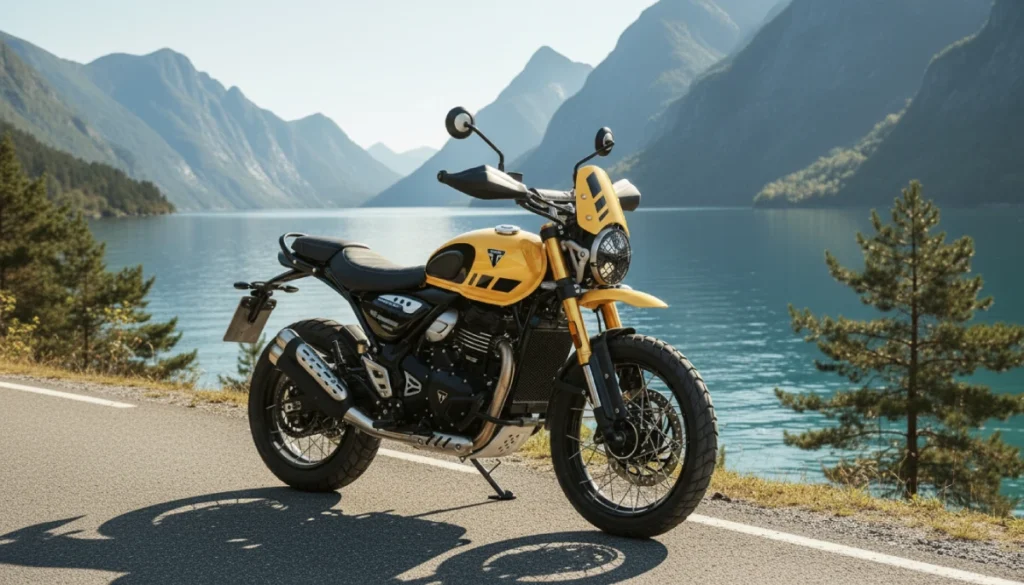
There’s something mischievous in the silhouette: upright bars, a tank with honest, useful knee cutouts, brushed bits that look like they’ve been touched by human hands. The ribbed seat sits flat and true, inviting a casual, centered stance—more about balance than aggression. A 19-inch front wheel stretches the bike’s posture just enough to look ready for a dirt path, but it keeps the whole thing poised rather than cartoonish.
I like the restraint. No gaudy angles, no firework graphics, just proper lines you recognize at a glance—Triumph DNA without cosplay. The fork gaiters and the wide-set pegs give it that “I’ve been here before” confidence, and the exhaust’s upswept profile nods to its bigger Scrambler siblings without pretending it can swallow a desert stage.
Stand a few feet back and the proportions click: tank-to-seat-to-rear-loop, simple and right. Up close, little touches catch the light—the way the headlight bezel sits, the subtle Triumph crest, the tidy cable routing like someone actually cared. I can’t quantify why it lingers in my head, only that it feels like a bike with a sense of history and a clear, modern punctuation mark.
City commutes that feel like little dirt detours
The Scrambler 400 lifts your view just enough to see over hatchbacks and around delivery vans, which has a way of de-stressing the daily ride. The bars offer a full handful of leverage; flicking around potholes becomes a small game you feel like winning. Long-ish suspension travel smooths out the city’s broken promises—painted crosswalks with ridges, sneaky speed humps, the scar tissue of old roadworks.
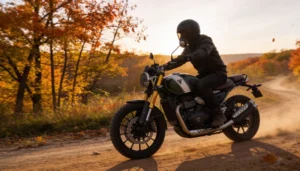
I took a short cutoff once—half-legal, half-gravel—only to find the bike felt happier than I did. The dual-purpose tires quietly shrugged at the loose stuff, and the chassis didn’t tense up when the tarmac ended. You can dial back the electronics when you want a little slip from the rear, then bring it all back for rain and reality.
Traffic-light moments are their own little ritual: neutral easy to find, clutch pull light and polite, the fan whispering rather than whooshing. It’s a bike that wants to be in motion but doesn’t punish you when you’re not, which is rare in this price bracket. The idea of “just one more detour” stopped being a joke after week two.
That fizzy single’s soundtrack I can’t shake
Triumph’s 400 single has that intimate hum you feel through the pegs and palms—alive but not buzzy. Crack the throttle and it spins up with a tidy urgency, more eager than frantic, and the fueling stays clean even when you’re feathering it through a tight corner. There’s real midrange there, honest torque that nudges you past buses without having to wring the neck every time.
On back alleys, the exhaust note is a friendly bark ricocheting off brick—never obnoxious, just enough to make you grin under the lid. Clicks through the six-speed are neat and short, the slip-assist clutch smoothing out your lazier downshifts like a good friend covering for you. It’s not the kind of engine that begs for redline theatrics; it’s the kind that makes third gear feel like a conversation.
At around 40 horses on paper, the numbers won’t scare anyone, and that’s fine. What matters is the tempo it suggests: brisk, nimble, un-intimidating. There are a few ripples of vibration high in the revs, sure, but they’re the kind that reminds you the bike is breathing, not complaining.
Where price, kit, and heritage land just right
This is where it gets almost annoyingly sensible. You’re getting the badge with real history attached, and yet the spec sheet reads like a modern wish list: ride-by-wire, switchable traction control, ABS you can tailor for light off-road dabbling, LED lighting that doesn’t look cheap. The analog-digital dash is refreshingly simple—gear indicator, fuel, trip—without the gadget bloat.
Triumph’s done the homework on the practical bits, too. The service intervals aren’t breathing down your neck, and the little touches matter: an immobilizer that makes city parking less nerve-racking, a USB port to rescue a dying phone, accessories that look like they belong instead of a parts-bin afterthought. Even the mirrors stay mostly clear above 60, which is a small miracle in commuter reality.
And the number on the tag lands in that sweet circle: reachable without a spreadsheet meltdown, aspirational enough to feel like a treat. It undercuts some big-name rivals while looking and feeling more grown-up than the spec would suggest. Heritage, but accessible. Modern kit, but warm-blooded. That balance is the reason I keep imagining the keys already in my pocket.
I keep catching myself mapping tiny routes that string together crumbly cut-throughs and riverside towpaths, as if the Scrambler 400 deserves a map with more smudges than lines. The bike doesn’t yell; it nudges. It’s the kind of nudge that pulls you out for milk and brings you back two hours later, dusty and smiling, with the milk warm and your head finally quiet.